Cool & barefoot-friendly
Natural stone in lighter blends stays more comfortable underfoot than dark tiles or pavers on a hot Geelong day — choose a cooler tone for the most barefoot-friendly result, and we'll show you the difference on real samples.
A barefoot-friendly resin-bound stone deck that stays comfortable underfoot, resists slips at the wet edge and drains freely over a suitable base — with no loose stone tracked into the pool or skimmer. Designed for Geelong, Bellarine and Surf Coast backyards, and the long, bright summers they get.
Images on this page are indicative renders to show finish and colour — not photographs of completed Terralume jobs. We're a new local business and we'll never present an AI render as a real job. Real stone samples are brought to every quote.
 0 loose pebbles in the pool
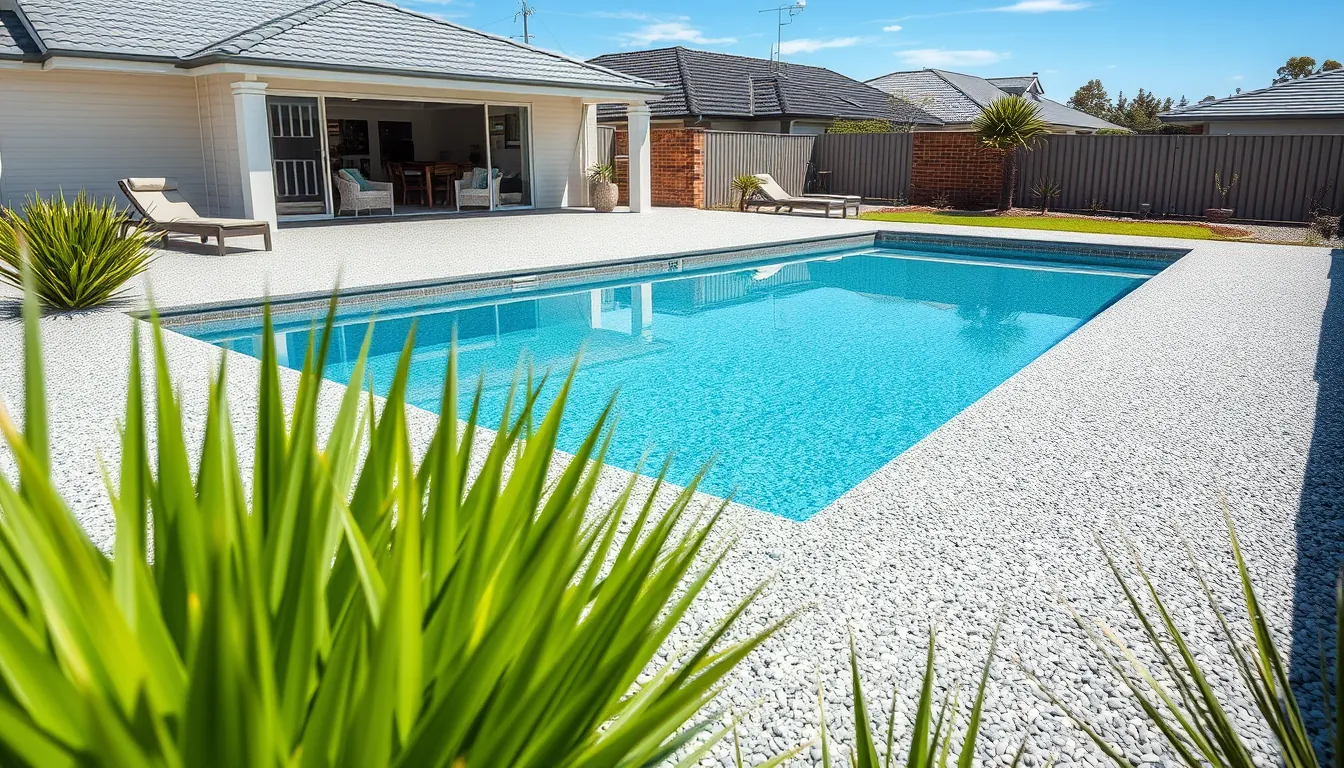
A pool surround works harder than almost any surface in the yard: constant splash and wet, bare feet all summer, sunscreen, and the back-and-forth of chlorinated or salt pool water. Resin-bound stone is mixed and trowelled on site into one continuous, flush surface — so there are no tile grout lines to turn slippery, no joints to trip on, and no loose pebbles to migrate into the pool or block the skimmer.
We confirm the exact resin and aggregate system against the product's TDS/SDS for poolside use before we quote — we don't make blanket chlorine or salt-resistance claims we can't stand behind.
Book a free assessmentThe qualities that matter most around a pool — without overselling what the surface can do. We'd rather tell you where it shines and where the limits are than make a claim we can't back at handover.
Natural stone in lighter blends stays more comfortable underfoot than dark tiles or pavers on a hot Geelong day — choose a cooler tone for the most barefoot-friendly result, and we'll show you the difference on real samples.
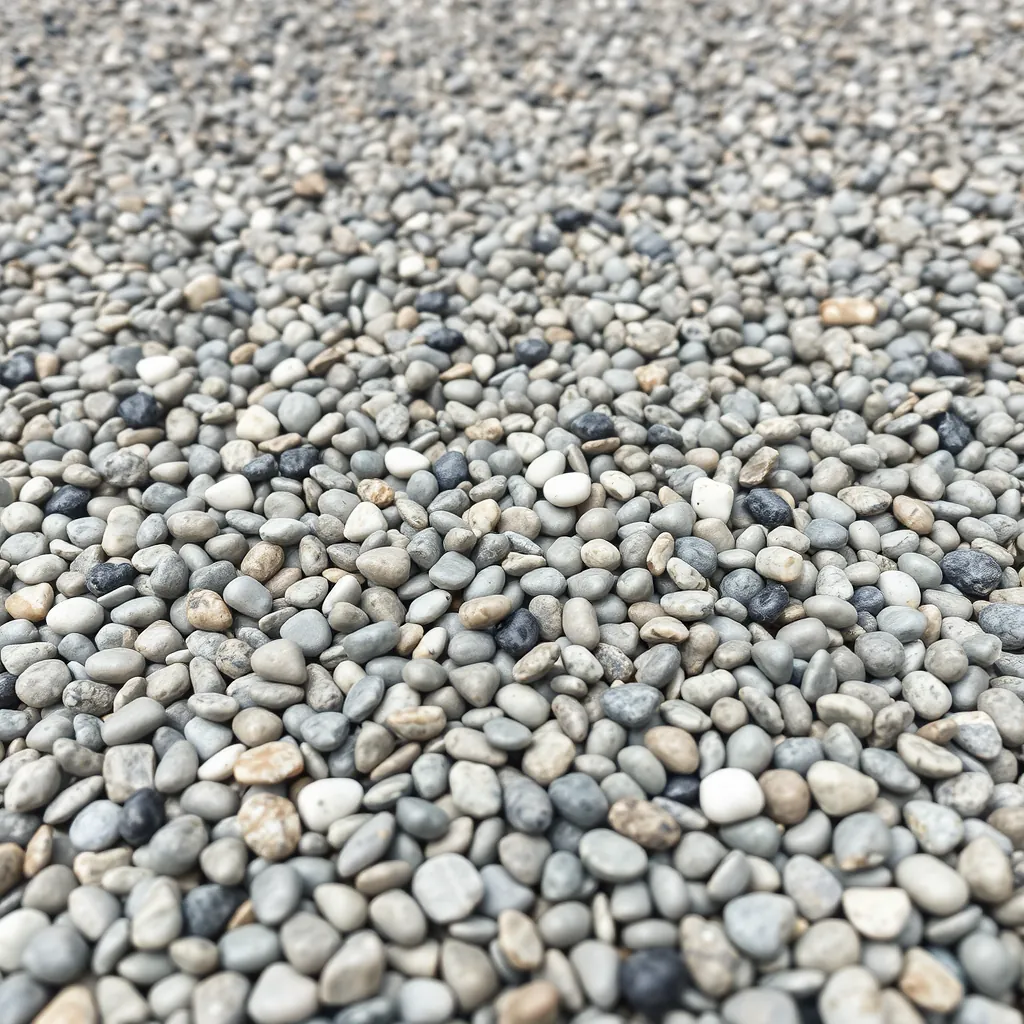
The rounded ~2–5 mm aggregate gives a naturally textured, grippy surface underfoot — a key reason resin-bound suits wet pool edges far better than smooth tile or polished concrete.
Laid over a suitable, free-draining base the surface lets splash-out and rain soak away rather than pooling — kinder to the deck and to drainage (a WSUD-friendly approach, subject to your site and council).
One continuous trowelled surface — no joints, and no scatter-coat shedding loose pebbles into the pool or skimmer the way a resin-bonded finish can.
A two-part aliphatic resin resists the yellowing and breakdown you get from cheaper aromatic resins in full poolside sun — so the blend you choose still looks like the blend you chose in three summers' time.
Trowelled on site, it follows curved coping and organic, kidney or freeform pool shapes cleanly — with crisp edges to garden beds, paving and the pool itself.
Silver Grey — indicative stone render. Real samples provided at your quote.
A pool surround doesn't carry vehicle loads, so it's laid as a pedestrian wear course — typically around 15–18 mm — over a base that's right for your site. How it drains depends on that whole build-up, not the resin alone, and we'd rather be straight with you than oversell it.
The two complaints we hear most about old pool surrounds are "the pavers are too hot to walk on" and "it's slippery at the edge". Here's the plain version of how blend choice and surface texture affect each — no exaggerated numbers, just the trade-offs.
Lighter blends reflect more heat and stay more comfortable underfoot in full sun; darker blends run warmer. We'll never claim a surface is "cool to touch" in a 38 °C heatwave — but tone genuinely makes a difference, and we'll let you feel it on samples.
The rounded aggregate leaves a naturally textured surface, which is why resin-bound suits the splash zone far better than smooth tile or polished concrete. No surface is "non-slip" in every condition — so we talk through the right blend and texture for your setting rather than over-promise.
Because the stone is bound flush, there's no scatter-coat shedding pebbles into the water or skimmer, and no grout lines to harbour grime. A sweep and an occasional hose keeps the deck looking sharp through summer.
Poolside tends to suit cooler, lighter blends that stay comfortable underfoot and read fresh against water and sky. These are popular starting points — see the full range on our blends page, and we'll bring real stone samples to your quote.
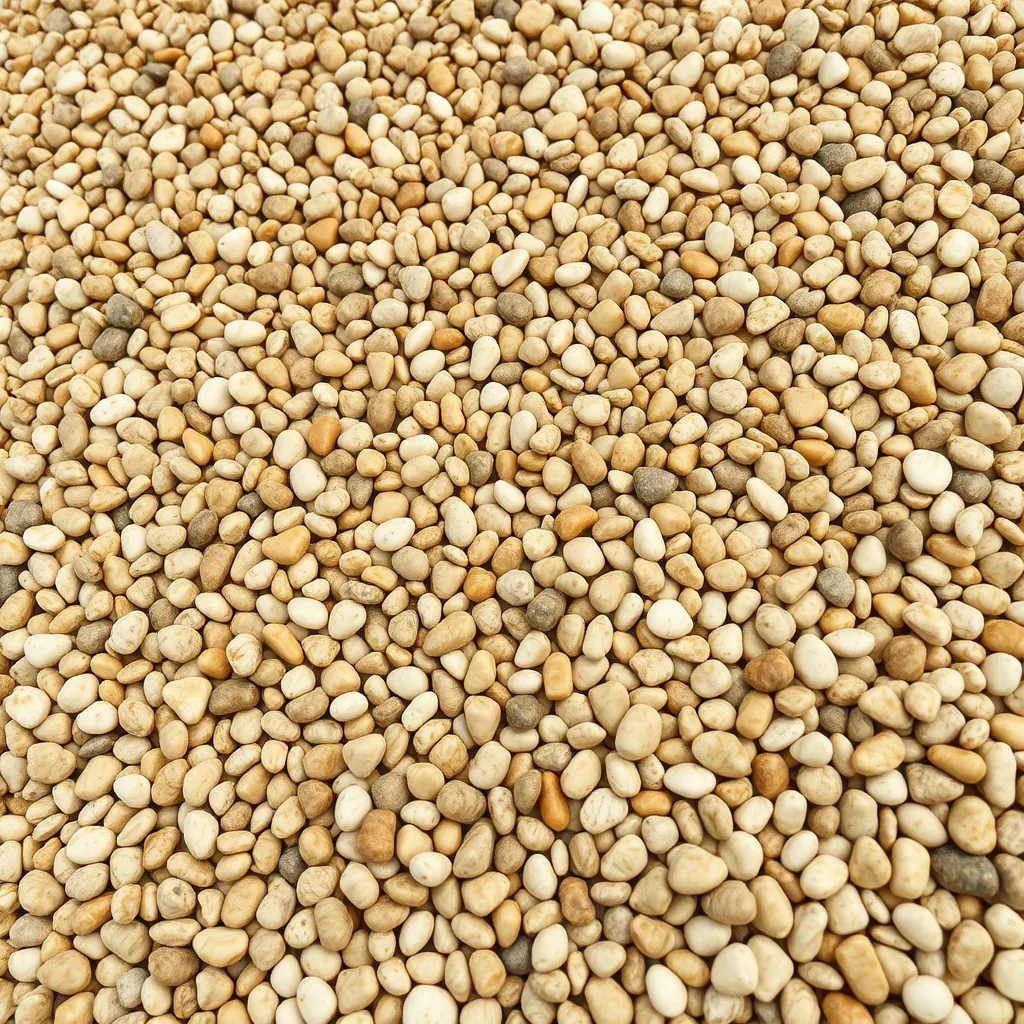
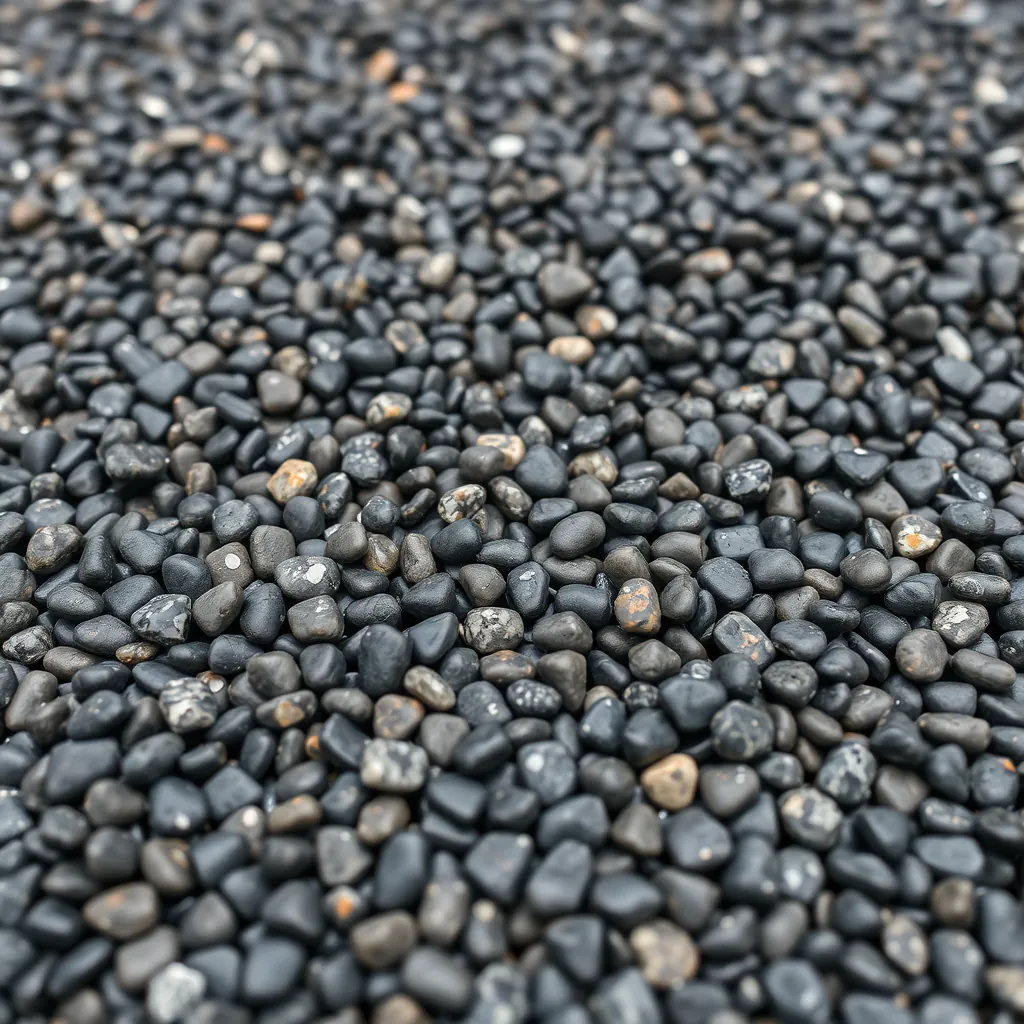
Blend renders are indicative — actual stone samples are provided at your free, no-obligation quote so you can choose with your own feet.
A closer look at the resin-bound aggregate blends we install — rounded ~2–5 mm stone, bound flush in UV-stable resin for the seamless, slip-resistant finish your pool surround will have.
A plain look at resin-bound stone against other common pool-surround surfaces. Every surface has its place — this just shows where resin-bound earns its keep at a wet, sunny, bare-foot edge.
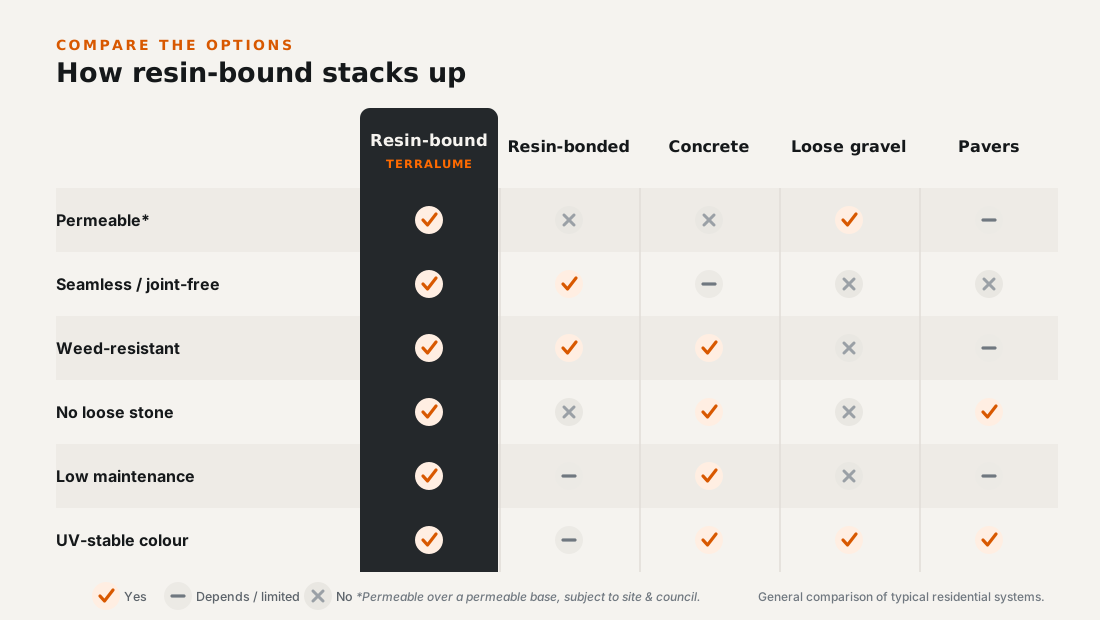
Indicative comparison of typical surface types. Real-world performance depends on the specific product, base build-up, site and installation — which is exactly what we confirm at your free assessment.
From first site visit to handover, a typical pool surround follows the same clear path. This is the short version — the full method, and what makes a base "sound", is on our how it works page.
We measure up, check your existing surround and coping, talk drainage, falls and council, and put the spec, blend and depth in a fixed written quote.
We clean and prime a sound existing slab, or build a permeable open-graded base — plus edging, falls away from the pool, and any repairs.
Aggregate and aliphatic resin are forced-mixed to ratio and trowelled flush by hand into one seamless deck, following the coping and pool shape cleanly.
We let it cure, inspect the finish and edges, walk you through aftercare and register your 5-year written workmanship guarantee.
An honest cure note. These are conservative milestones at around 20 °C — "open to traffic" is not the same as "fully cured", and everything below lengthens in cool weather. We'll confirm the actual times for your install on the day.
You can walk on it carefully — but it isn't fully cured, so keep furniture and loads off, and keep the area clear while it sets.
Once this milestone passes, the deck is ready for everyday poolside use — lounging, foot traffic and pool furniture.
The resin reaches its full hardness and chemical resistance — the surface is at its toughest. Cooler weather stretches all of these out.
Times are a conservative buffer above the resin manufacturer's TDS minimums, and lengthen in cold or winter conditions. We confirm the exact "ready to use" time for your install before we leave site.
Straight answers to what homeowners ask us most about poolside. Can't see yours? Get in touch — we're happy to talk it through.
The rounded ~2–5 mm aggregate gives a naturally textured, grippy surface — a key reason resin-bound suits wet pool edges better than smooth tile or polished concrete. That said, no surface is "non-slip" in every condition, so we'll talk through the right blend and texture for your setting and never claim more than the surface can do.
We specify a UV-stable aliphatic resin and confirm the exact resin/aggregate system against its product TDS/SDS for poolside use before quoting. We don't make blanket chlorine or salt-water resistance claims — we verify suitability for your pool first. We'll also walk you through simple aftercare to keep splash-out and sunscreen from building up on the surface.
Lighter, cooler tones — such as Silver Grey or Sandstone — reflect more heat and tend to stay more comfortable underfoot in full sun than darker blends like Charcoal Granite, which look striking but run warmer. We won't promise any surface stays "cool to touch" in a heatwave, but tone genuinely makes a difference. We bring real samples so you can feel it for yourself before you decide.
Laid over a suitable, free-draining base, splash-out and rain soak through rather than sheeting across the deck — but permeability is a property of the whole build-up and depends on your site, the falls and the Greater Geelong City Council. We assess this on site and set the falls away from the pool; we won't promise "no puddles ever".
Often yes — if the existing slab is sound, well-drained and not badly cracked or lifting, resin-bound stone can be bonded straight over it with no demolition (a non-permeable build-up in that case). If you want a permeable result, we'll discuss an open-graded base instead. We confirm exactly what your surround needs — and whether it needs any repair first — at the free assessment.
At around 20 °C, you can usually walk on it carefully after about 6–8 hours and return to normal poolside use after roughly 24–72 hours, with full cure at about 7 days. Cool and winter weather slows the resin, so these stretch out — and "open to traffic" isn't the same as "fully cured". We give you the actual ready-to-use time for your specific install before we leave site.
Tell us about your pool and we'll arrange a free, no-obligation site assessment. We bring real stone samples, check your surround and drainage, and put the spec, blend, depth and timeline in a fixed written quote — backed by our 5-year written workmanship guarantee.